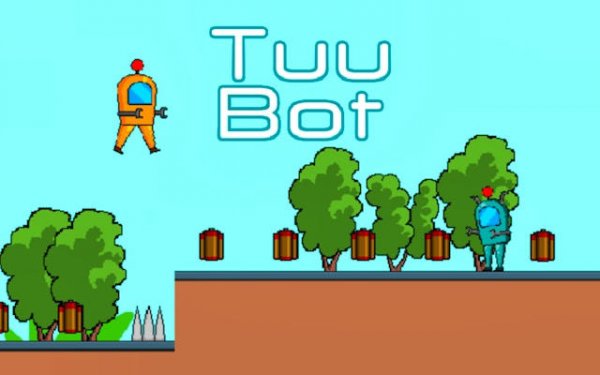
Core Loop and Double-Jump Mechanic
Every stage in Neon Circuit Runner follows the same clear objective: collect all energy cells scattered across the level, then reach the exit portal. That simple loop supports increasingly complex puzzle-platforming. The double-jump is central to this structure. It lets the automaton reach elevated platforms and clear gaps that a single jump cannot, so each stage becomes a test of timing and spatial reasoning. Missing a jump usually means falling or having to retry a section, which keeps the focus on precision rather than speed.
Eight Stages and Progressive Difficulty
The game includes eight stages arranged along a progressive difficulty curve. Early levels teach basic platforming and the double-jump mechanic. Later courses combine those elements in more intricate arrangements, with moving obstacles that operate at different speeds and patterns. Energy cells are often placed in spots that require creative use of the double-jump, which encourages exploration instead of a straight dash to the exit. This design keeps the experience approachable for newcomers while giving later stages more bite.
Controls and Immediate Feedback
Movement uses simple keyboard inputs: directional keys for left and right, a dedicated jump button, and a crouch function for low passages. Pressing jump again while airborne triggers the double-jump. The control scheme is easy to learn, so attention stays on level navigation rather than complex button combinations. Feedback is immediate, making each successful jump or missed platform feel clear and fair. That clarity matters in a game where a single mistimed input can send the automaton back to a lower section.
Visual Style and Atmosphere
Neon Circuit Runner uses a futuristic aesthetic with neon accents and clean lines. Each stage has its own color palette and background, which gives a sense of progression through different environments. The automaton character is designed to be approachable, with smooth animations that make movement feel responsive. The overall look is bright and inviting, avoiding dark or intense themes. This visual approach supports the family-friendly tone and helps players focus on the platforming challenges rather than on distracting scenery.
Planning Over Rushing
Success comes from observation and patience. Before attempting a course, it helps to study the layout and note where obstacles move. Using the double-jump at the right moment can save time and prevent falls. Collecting all energy cells before heading to the exit avoids unnecessary backtracking. Precision matters more than speed; rushing often leads to mistakes. Taking a moment to plan each move leads to a smoother experience, especially in the later stages where obstacle patterns overlap.







Comments
0 comments