Reassembling Scrambled Portraits
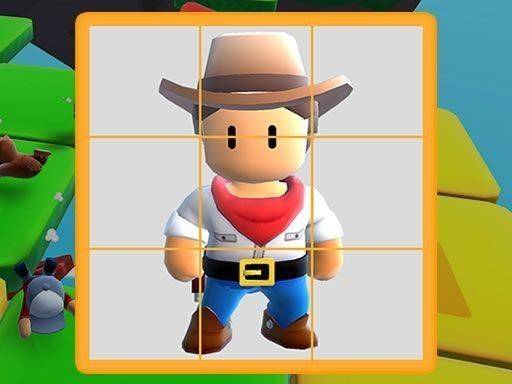
Tile Sort: Character Puzzle is a sliding tile game built around a single, clear objective: restore a scrambled image by moving tiles into an empty space. Every puzzle presents a different character-themed picture broken into a grid. You tap or click a tile adjacent to the gap, and it slides into place. The controls never change, but the arrangement of each puzzle demands careful thought. Success depends on visualizing the finished image and planning a sequence of moves rather than reacting quickly.
Bright Characters, Gentle Pace
The artwork focuses on friendly characters in clean, colorful scenes. Each puzzle offers a distinct portrait or scene, so the visual variety keeps the experience from feeling repetitive. A gentle time element appears on each puzzle, encouraging faster completion without adding pressure. When you finish an image, the game rewards you with a satisfying full-screen view of the completed picture. The overall tone stays relaxed and positive, which makes the game suitable for both children and adults.
Difficulty That Grows With You
Early puzzles use simpler grids that need only a few moves. As you advance, the number of tiles increases and the images become more detailed, requiring greater attention and strategy. This gradual ramp-up lets newcomers build confidence while giving experienced players room to refine their technique. Because each puzzle has a unique layout, you cannot rely on memorized solutions. Instead, you develop pattern recognition and spatial reasoning over time.
Responsive Controls and Minimal Interface
The sliding mechanic responds precisely to touch or mouse input, reducing frustration from misclicks or lag. The interface stays minimal, keeping attention on the puzzle itself. There are no complicated menus or lengthy instructions; you can start a new puzzle immediately. This design makes the game accessible to players who are new to puzzle games while still offering enough depth for regular players who want to improve their completion times.



Comments
0 comments