Key Collection and Route Planning
Each level in Spatial Maze Logic Challenge asks players to find several keys scattered across a three-dimensional maze before the exit door opens. The core task is not simply walking around—it is mapping an efficient path while accounting for obstacles that shift or disappear. Because every layout changes, memorizing one solution rarely helps on the next stage. Instead, players must read the space, judge distances, and decide when to move.
Obstacles That Reward Patience
Moving barriers slide between positions, so passing through a gap depends on timing rather than speed. Floor panels that give way send the character back to the start, turning a careless step into a full reset. These hazards are placed to slow players down and encourage observation. Rushing usually costs more time than pausing to watch a pattern. The game never imposes a timer, so there is no penalty for standing still and studying the maze.
Character Choice and Camera Perspective
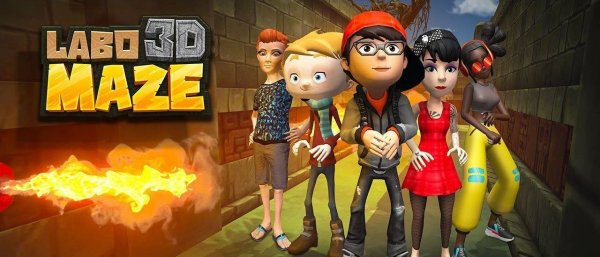
Before a run begins, players pick from a set of characters. The choice changes only appearance, not abilities or movement, so it serves as a cosmetic preference rather than a strategic decision. A top-down 3D camera shows the full maze layout, which supports spatial awareness. From this angle, players can trace routes, spot key locations, and anticipate where a moving barrier will be before committing to a direction.
Difficulty Curve and Family Play
Early stages introduce simple layouts with few keys, acting as a gentle tutorial. Later levels add more complex structures and a higher number of keys to collect, demanding more forward planning. The relaxed pace and lack of time pressure make the game suitable for short sessions. Bright, colorful visuals and simple controls keep it accessible to children and adults, while the logic-based challenge gives it enough depth to hold attention beyond a single sitting.







Comments
0 comments