Core Combat Loop
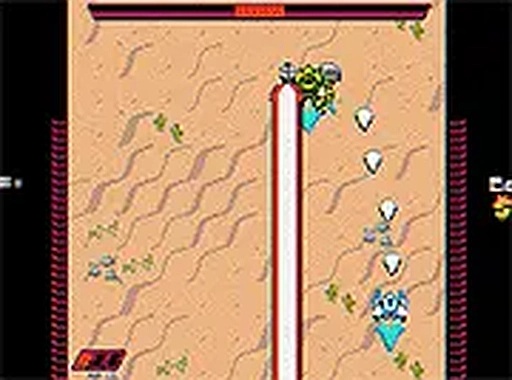
Mech Commander: Arcade Assault focuses on a tight, reflex-driven combat system. Players guide their mech across a fixed arena while a massive boss opponent unleashes a variety of projectiles and area attacks. The primary challenge lies in reading the boss's tells and finding safe windows to return fire. Unlike many shooters, this game introduces a heat gauge that limits sustained fire. Let the meter fill completely, and your weapons will temporarily lock up, leaving you vulnerable. This forces a rhythm of short, accurate bursts rather than continuous shooting.
Boss Design Philosophy
Each of the five major encounters features a completely different mechanical design and attack set. One boss might rely on sweeping laser beams that force constant movement, while another could summon smaller drones that clutter the arena. The random ability element means that even the same boss can behave differently between play sessions. This system keeps the gameplay fresh and encourages players to adapt on the fly rather than memorizing a single sequence. The difficulty curve is steady, with later bosses introducing more complex patterns that require precise positioning.
Visual Style and Performance
The game adopts a deliberate pixel-art aesthetic that evokes early 1990s arcade cabinets. Each mech and boss is rendered with clear, readable sprites that make it easy to track movement and incoming threats. The color palette is bright and varied, helping different projectiles stand out against the background. Since the game runs entirely in a browser, performance is optimized for smooth 60 frames per second on most desktop systems. A full-screen mode is available to eliminate distractions and improve visibility during intense fights.
Strategic Depth and Replay Value
Beyond raw reflexes, Mech Commander: Arcade Assault rewards strategic thinking. Players must decide when to prioritize dodging over dealing damage, especially when the heat gauge is near its limit. The random boss abilities mean that a strategy that worked in one run might fail in the next, forcing on-the-fly adjustments. This design naturally encourages multiple playthroughs. Each attempt builds familiarity with the core mechanics, and players often find themselves improving their times and efficiency as they learn to exploit small openings.







Comments
0 comments