What the Game Asks of Young Players
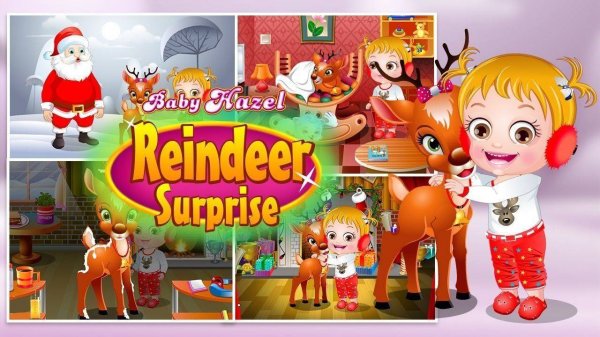
Baby Hazel Reindeer Care casts the player as Hazel's helper after Santa leaves a reindeer in her care for a few days. The task is straightforward: keep the animal happy and healthy. A happiness meter shows the reindeer's mood, so children can see how their choices affect it. Feeding and playing are the two core actions, and both are selected with a mouse or a touch screen. The game walks players through each step, so no reading-heavy menus or complex navigation stand in the way.
How Care Tasks Unfold
Players begin by picking food items to feed the reindeer, then move on to choosing activities to do together. Each choice produces a visible reaction from the reindeer, and Santa offers appreciation when tasks are completed well. The interface uses clear visual cues and simple instructions, which lets young children work through the game with growing independence. Because the happiness meter responds to care, the game encourages players to pay attention to the reindeer's needs rather than rush through screens.
Designed for Small Hands and Early Learners
The controls are built for small hands, and the graphics are aimed at young children. Step-by-step guidance means players are never left guessing what to do next. The experience is framed as a safe, family-friendly environment with no external links or inappropriate content, and the stated design goal is an ad-free space. Positive feedback from both the reindeer and Santa reinforces gentle, consistent care, turning each completed task into a small reward.
What Children Take Away
Beyond entertainment, the game introduces ideas of responsibility and empathy by linking the player's actions to the reindeer's mood. Children who enjoy animals and interactive activities are the intended audience. The learning is embedded in the care routine itself: feed, play, observe the meter, and respond. That loop is simple enough for early learners, yet it gives them a sense of cause and effect that carries beyond the screen.





Comments
0 comments