Core Gameplay and Objective
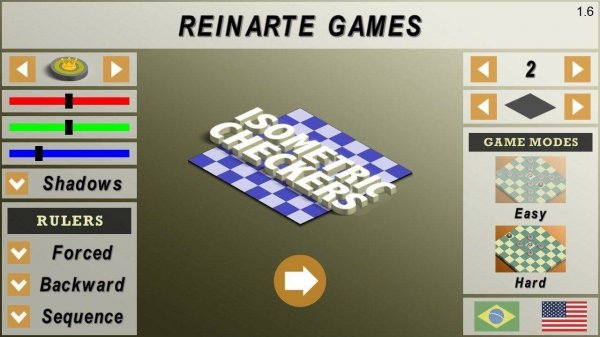
Reinarte Checkers Classic Board Game recreates the traditional two-player board game on a 64-square grid with 12 pieces per side. The objective is to capture all opponent pieces or block their legal moves. Players move pieces diagonally to adjacent empty squares, and captures occur by jumping over an opponent's piece to an empty square beyond it. Reaching the opposite end of the board crowns a piece as a king, which can then move both forward and backward. Each turn requires planning ahead, as a single move can open or close strategic options for both players.
Controls and Interface
The game uses smooth drag-and-drop controls: players simply drag a piece to a legal square. A clean interface keeps the board and pieces visible without clutter. This input method works well for quick matches or longer sessions, as it minimizes misclicks and keeps the focus on decision-making. The digital format also handles rule enforcement automatically, so players do not need to remember capture requirements or king movement rules.
Game Modes and Opponents
Reinarte Checkers offers two primary ways to play: against a friend or against the computer. The AI opponent includes adjustable difficulty, allowing beginners to start with simpler challenges and experienced players to face tougher resistance. Online multiplayer mode lets players compete with friends remotely. The game emphasizes fair play and family-friendly entertainment, making it suitable for all ages. Whether you are new to checkers or an experienced player, the available modes cover both casual and competitive preferences.
Visual Style and Accessibility
Vibrant graphics distinguish the pieces and board squares clearly, which helps players track legal moves and capture sequences. The visual design supports the game's straightforward rules rather than distracting from them. Because checkers relies on pattern recognition and foresight, clear visuals directly affect how well players can plan. The game ends when one player wins or a draw is agreed upon, and the interface makes these outcomes clear without ambiguity.








Comments
0 comments