Battery as a Resource and Timer
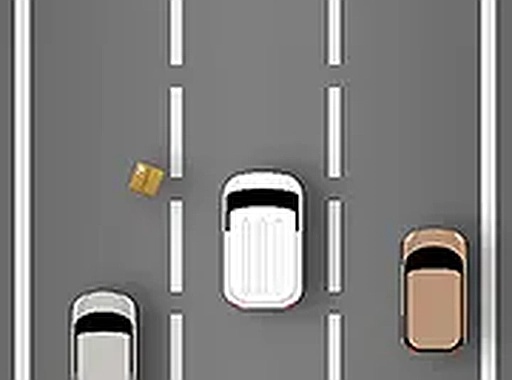
The van starts each run with a limited power reserve, and the battery meter doubles as a countdown. Unlike racing games where speed is the only goal, here every decision is weighed against remaining charge. Accelerating burns energy faster; a detour to grab a package costs time but may extend the run. Players must constantly judge whether the next pickup is worth the distance, turning each drive into a resource-allocation puzzle.
Reading the Road: Traffic and Fog
Roads are not empty. Other vehicles appear, and hitting one can slow progress or end the run outright, so defensive steering and speed control matter more than raw pace. Fog patches reduce visibility, forcing players to rely on memory and careful steering to stay on the correct path. These two hazards vary the driving experience and keep each trip from feeling identical.
Packages as a Core Mechanic
Packages scattered along the route are the only way to replenish the battery. Collecting one adds charge, giving more time to reach the finish. This makes package collection a necessity, not a bonus. Drivers must prioritize which packages to pursue based on current battery level and the distance to the next pickup. Sometimes skipping a far-off package is the smarter choice if it conserves energy for a more accessible one.
Progression and Controls
The game is structured in multiple stages, each introducing new road layouts and obstacle patterns. Early levels function as a tutorial for the driving-and-collecting loop; later stages add denser traffic, more frequent fog, and packages in trickier spots. Controls use either keyboard inputs or touchscreen gestures, with responsive steering, acceleration, and braking. This simplicity makes the game approachable for a wide range of ages.







Comments
0 comments