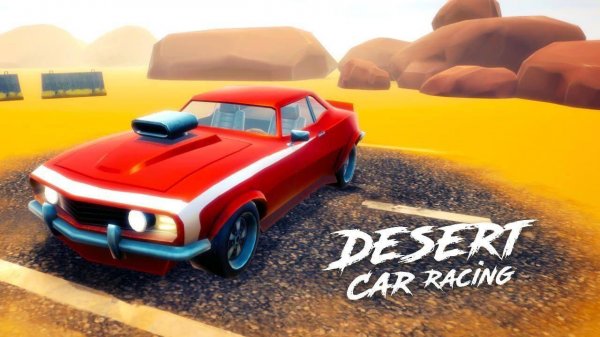
Desert Tracks and Terrain
Every course in Desert Dash Arcade Racer is built around desert geography: sand dunes, rocky mountains, and roads with steep 360-degree inclines. These surfaces are not cosmetic. Loose sand reduces grip, so accelerating smoothly matters more than raw speed. Sharp turns appear after long straights, forcing you to brake early or risk sliding wide. The mix of dunes and slopes means each track asks for a different rhythm—some reward patience, others reward a well-timed burst of speed.
Steering and Speed Control
You steer with keyboard arrows or on-screen controls. The inputs are responsive, which makes the game easy to start but hard to perfect. Maintaining a steady speed through corners prevents traction loss on sand, while looking ahead lets you anticipate curves and hills. The challenge is not just avoiding obstacles but managing momentum: enter a turn too fast and you lose control; too slow and you miss the target time. This balance gives the game its skill-based edge.
Unlocking and Progression
Completing races within time limits or finishing in a target position unlocks new vehicles. Four different cars are available, each with unique handling and speed characteristics. A car that excels on straights may struggle in tight corners, so experimenting helps you find one that matches your driving style. Repeating tracks is encouraged—not as a grind, but as a way to learn racing lines and improve lap times. The progression system ties directly to your growing familiarity with each course.
Session Length and Audience
The game supports both quick play sessions and longer practice runs. A single race can be finished in a few minutes, but mastering a track takes repeated attempts. This makes it suitable for players who want a casual arcade experience and for those who enjoy chasing faster times. The focus on precision and timing, rather than combat or story, defines the experience.








Comments
0 comments